
Introduction: A Living Art Form
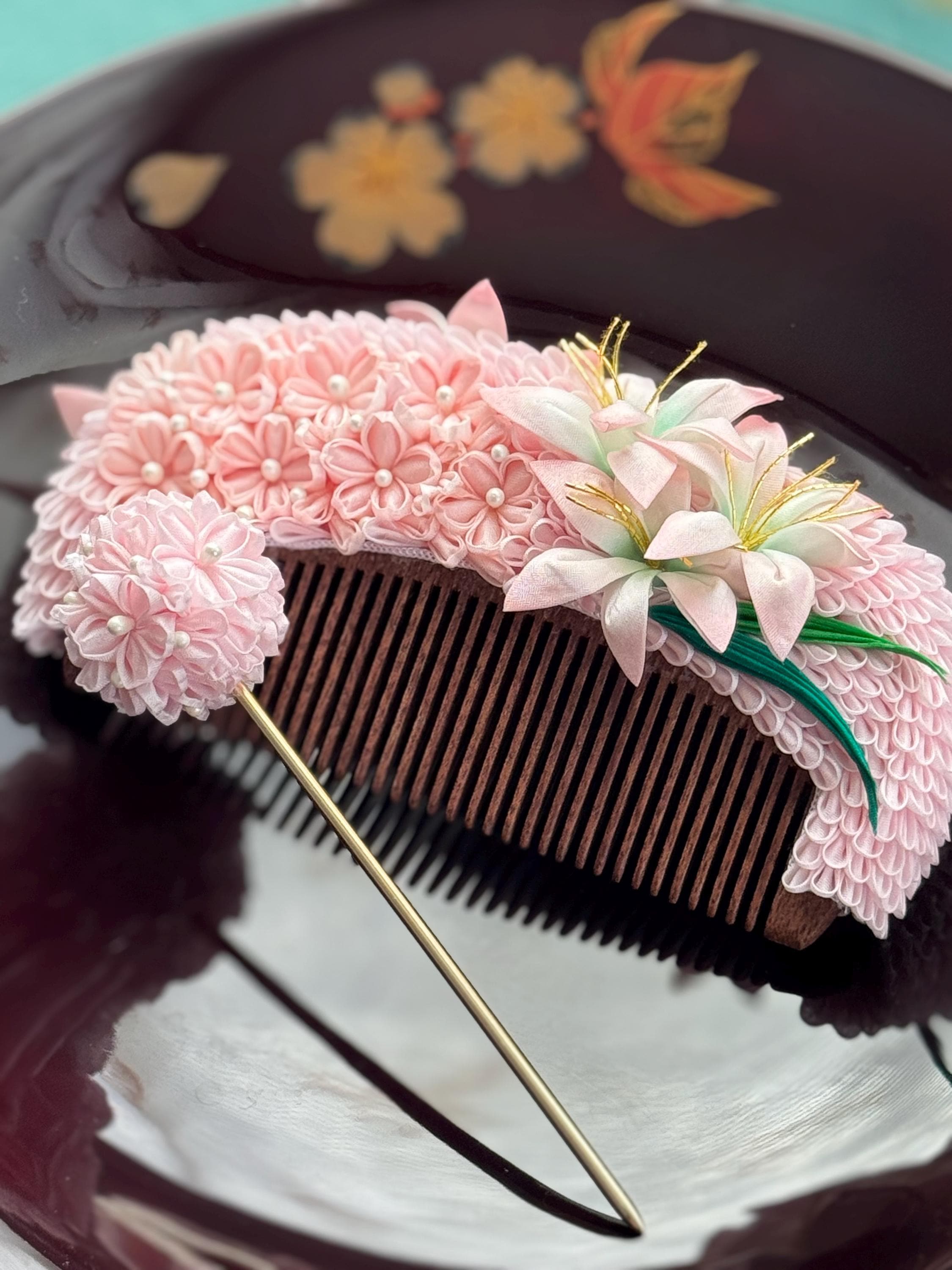
Tsumamizaiku (つまみ細工) is one of Japan’s most delicate and poetic traditional crafts—an art form that transforms small squares of fabric into intricate floral designs through careful folding and pinching. At first glance, it may seem like simple ornamentation. In reality, tsumamizaiku is a centuries-old cultural expression that captures the essence of Japanese aesthetics: seasonality, subtlety, and attention to fleeting beauty.Today, this heritage craft is not only preserved but also evolving. Businesses like Kawasemizaiku are pushing tsumamizaiku into the future—blending traditional artistry with modern technology such as blockchain authentication, ensuring that each piece is not just beautiful, but also uniquely verifiable.
The Origins of Tsumamizaiku
Tsumamizaiku dates back to the Edo period (1603–1868), a time when Japan experienced cultural flourishing under relative peace. The craft emerged primarily among artisans who created ornamental hairpieces (kanzashi) for women, especially geisha and maiko.The word “tsumami” means “to pinch,” referring to the technique of folding tiny squares of silk using tweezers or fingers. Each folded piece forms a petal, and multiple petals are assembled into flowers or seasonal motifs.These ornaments were not random decorations. They carried deep meaning:
- Cherry blossoms (sakura): the fleeting nature of life
- Plum blossoms (ume): resilience and renewal
- Chrysanthemums (kiku): longevity and imperial symbolism
In traditional Japanese culture, appearance reflects awareness. Wearing seasonal motifs was a subtle but powerful way to show cultural refinement.
The Cultural Significance: More Than Decoration
Tsumamizaiku sits at the intersection of multiple Japanese cultural values:
1. Seasonality (季節感 / Kisetsukan)
Japan’s culture places strong emphasis on the changing seasons. Tsumamizaiku reflects this through designs that evolve throughout the year. A wearer in spring would never wear autumn motifs—doing so would signal a lack of cultural sensitivity.
2. Wabi-Sabi Aesthetic
The philosophy of appreciating imperfection and impermanence is embedded in tsumamizaiku. Each handmade piece is slightly different—these variations are not flaws, but proof of authenticity.
3. Craftsmanship (職人精神 / Shokunin Spirit)
Mastering tsumamizaiku requires patience, precision, and discipline. Artisans spend years refining their technique, often repeating the same folds thousands of times to achieve perfection.
Kawasemizaiku: Bridging Tradition and Innovation
Kawasemizaiku represents a new chapter in the evolution of tsumamizaiku.Instead of mass-producing decorative items, Kawasemizaiku focuses on creating one-of-a-kind artworks, each piece designed to reflect:
- Japanese seasonal moods
- Cultural symbolism
- Emotional storytelling through color and form
No two creations are identical. Each work is treated as a collectible piece of art rather than a simple accessory.
What Sets Kawasemizaiku Apart?
1. Unique Artistic IdentityRather than replicating traditional patterns, Kawasemizaiku reinterprets them. A single piece may combine classical motifs with modern composition, creating something both familiar and entirely new.
2. Seasonal Narrative DesignEach artwork embodies a specific moment in time—early spring blossoms, midsummer vibrancy, or quiet winter stillness. This aligns with traditional Japanese sensitivity while making it accessible to a global audience.
3. Blockchain AuthenticationHere’s where things get interesting—and where many traditional crafts fall behind.Kawasemizaiku integrates blockchain technology to authenticate each artwork. This means:
- Every piece has a digital certificate of ownership
- Provenance (history of ownership) is securely recorded
- Counterfeiting becomes nearly impossible
This is not a gimmick—it solves a real problem in the art world: trust.In traditional crafts, authenticity is often based on reputation. With blockchain, authenticity becomes verifiable.